Why you need paint correction before installing a ceramic coating
Applying a ceramic coating over imperfect paint locks in flaws. Learn why correcting the surface first is essential for shine, longevity, and avoiding a finish that looks worse than before.
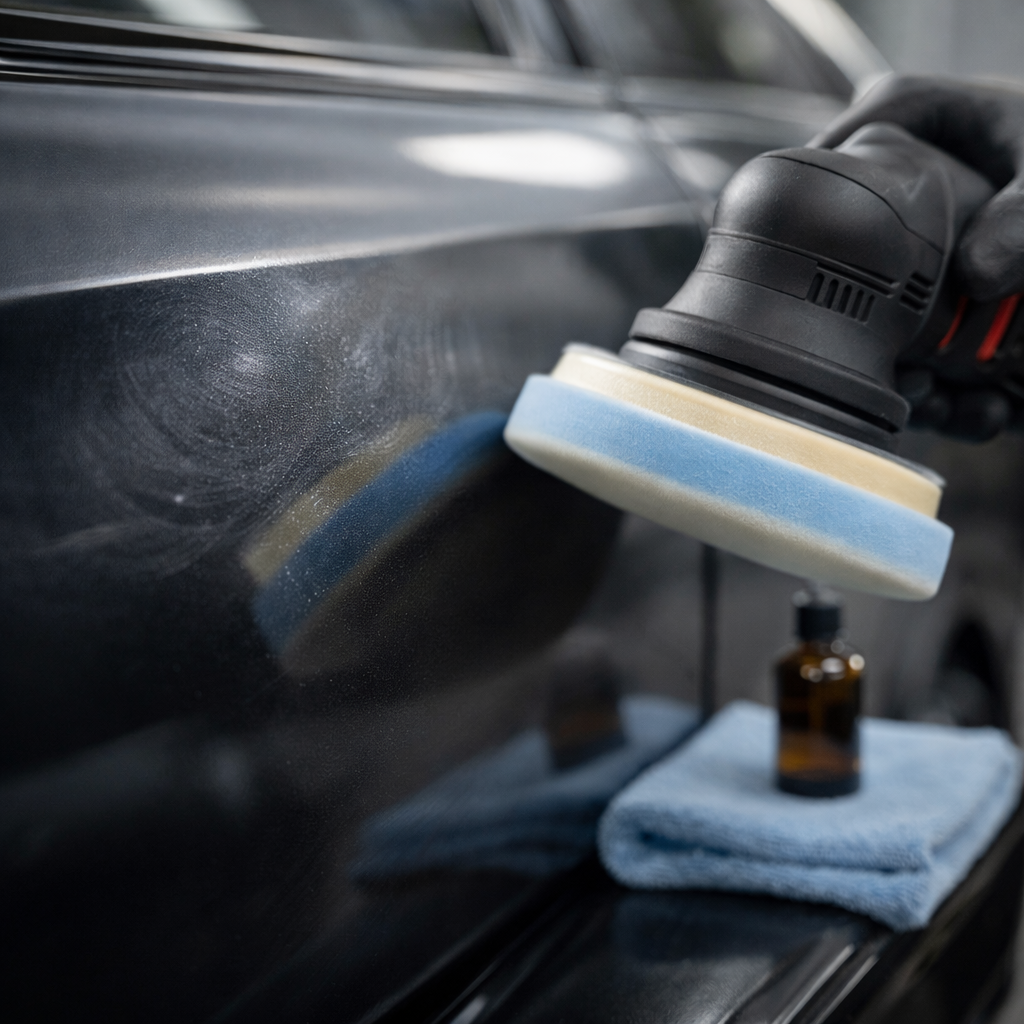
Ceramic coatings are incredibly durable and meant to last years. That’s exactly why you must make sure the paint is flawless before applying one. If you coat over swirl marks, scratches, or haze, you’re sealing those imperfections under a hard, permanent layer, often making the car look worse, not better.
Think of a coating like a hard, clear shell. Whatever surface it goes on is what you’ll see for a long time. If that surface is imperfect, the shell simply preserves the imperfection.
Why paint correction comes first
1) A coating locks in whatever finish you have
• Professional detailers and shops emphasize that paint correction is the foundation of ceramic coating work. One professional guidance source explains that coating over corrected paint not only looks better, but lasts longer and protects as intended. 
• Another detailing resource clarifies that removing imperfections creates a smooth, clean canvas so a protective coating can adhere properly and deliver optimal results. 
If you skip correction, you may still technically have a coating, but the visual result is a hard layer over defects... swirls, light scratches, water spots, or haze, making them more visible, not less.
2) Correction improves appearance dramatically
Correcting paint removes, reduces, or refines swirl marks, light scratches, and other blemishes. It’s the difference between a finish that looks factory‑new and one that looks dull or marred, even if protected.
A trusted detailing source puts it simply: addressing imperfections first enhances the shine that will be locked in through ceramic coating. 
If you want showroom depth, clarity, and true gloss, you need the surface to be clean and corrected before the coating goes on.
3) Repairs after coating are harder and more invasive
Once a coating is applied, any future correction or scratch removal becomes more complicated:
• Some providers note that if a coated surface gets damaged or scratched, removing the coating in that spot may be necessary to fix the paint. This often involves polishing or correction that removes a bit more clear coat. 
• That means coating before correction can lead to more work later, either removing the coating to correct defects, or living with a finish that shows flaws more clearly.
Doing correction first avoids this tradeoff. You fix the paint once, then protect that perfected surface.
What this means for you, practically
- Expect a two‑step process for best results
• Step 1: Thorough wash, decontamination, and paint correction to remove swirl marks, light scratches, and other defects.
• Step 2: Apply the ceramic coating to the corrected, clean surface.
Skipping step 1 is like painting over a wall that’s cracked and uneven, nothing stops those imperfections from showing.
- A short‑term rush isn’t worth a long‑term problem
Someone might offer to coat immediately to save time or money. But if the surface isn’t corrected, the car may look less sharp after coating than it did before, and you’re stuck with that look for a long time.
- Corrected paint + coating = the best visual payoff
When correction is done well, the coating magnifies that clarity, depth, and gloss, and helps it stay that way longer with less maintenance.
How to decide whether you need paint correction first
• You see swirl marks or hazy areas in sunlight. That’s a sign correction will immediately raise the overall look.
• Your car has light scratches from prior washing or transport. Even minor defects become obvious under a hard coating.
• You want the finish to look truly new, not just slick. Coating over corrected paint gives you the highest visual return.
If you’re unsure, a quick professional inspection can tell you whether your paint needs full, partial, or only light correction before coating. But the guiding principle is simple: better paint, better coating result.
Final thought
Ceramic coatings are long‑lasting and hard. That’s exactly why they should be applied to paint that’s already at its best. Correct first, coat second, so your car looks incredible now and stays that way for years, not weeks.