Technician’s Choice Blue Sapphire Dressing Review: A Long-Lasting Shine for Tires, Rubber, and Vinyl
A real-world review of Technician’s Choice TEC325 Blue Sapphire Dressing, an economical rubber and vinyl dressing that leaves a clean shine, cures dry, and can last 30+ days.
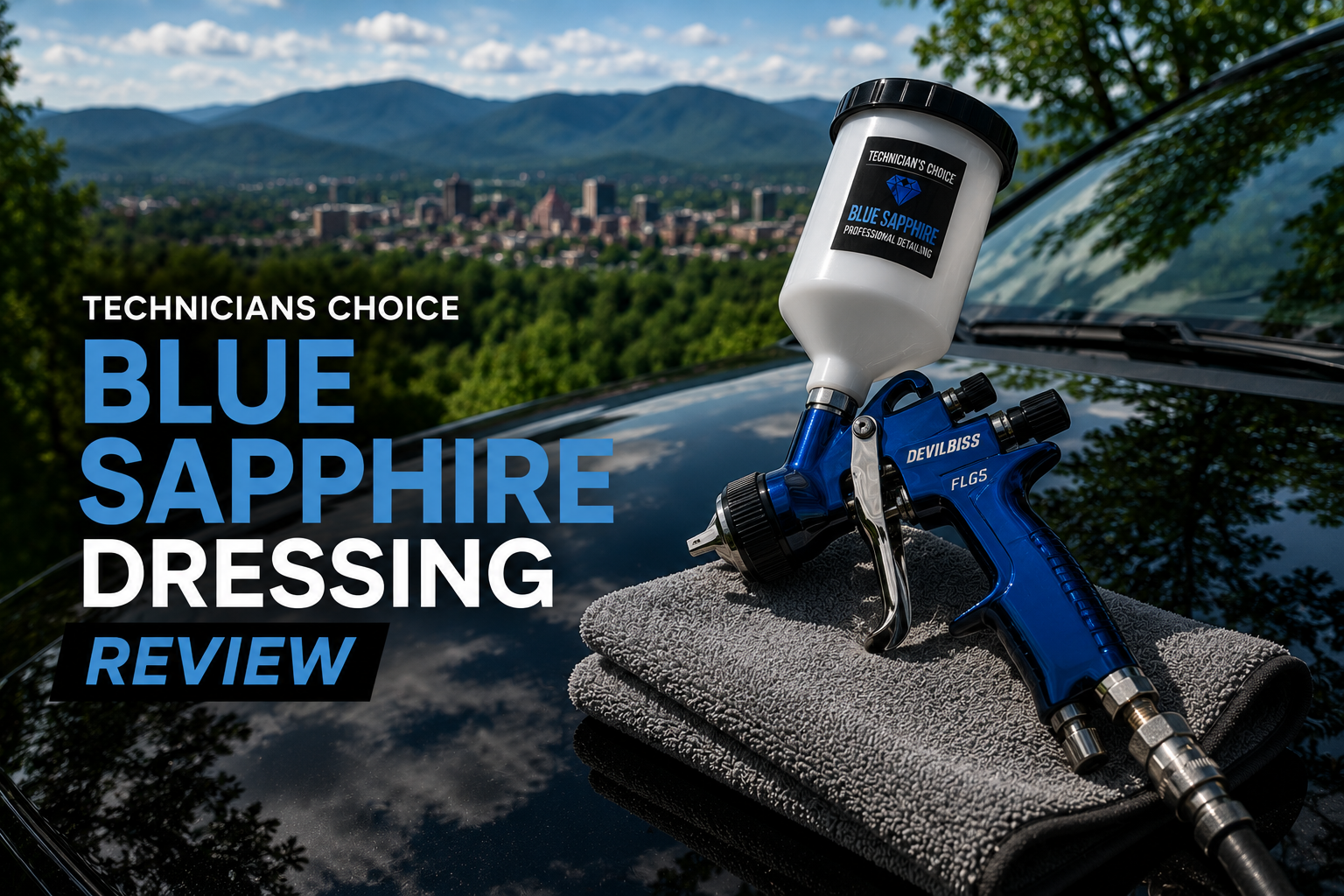
Technician’s Choice Blue Sapphire Dressing Review: My Go-To Dressing for Interior Plastics, Engine Bays, and Trim
Finding a good dressing for plastic, rubber, and vinyl sounds simple until you actually start testing products. Some dressings are too greasy. Some are too shiny. Some attract dust. Some look good for a day and disappear after the first rain.
Lately, one of my favorite all-around dressings has been Technician’s Choice TEC325 Blue Sapphire Rubber & Vinyl Dressing.
You can find it here: Technician’s Choice Blue Sapphire Dressing
While a lot of people may think of this type of product as a tire dressing, I actually like Blue Sapphire most for interior plastics, engine bays, exterior trim, rubber seals, and general plastic restoration work. It gives surfaces a clean, refreshed look without making everything feel sticky or overly greasy.
What Is Blue Sapphire Dressing?
Technician’s Choice Blue Sapphire is a rubber and vinyl dressing designed for surfaces like rubber, vinyl, plastic, trim, and similar materials. It is solvent-free, VOC/OTC compliant, and can be diluted with water, which makes it very economical for both professional detailers and DIY users.
One of the reasons I like it so much is that it can be diluted 1:1 with water and still performs well. That makes a gallon last a long time, especially compared to aerosol dressings or ready-to-use products that get used up quickly.
It also has a bubble gum fragrance, which is a nice bonus. It does not have that harsh chemical smell that some dressings have.
Where Blue Sapphire Works Best
In my experience, Blue Sapphire is best on:
- Interior plastics
- Engine bay plastics and rubber
- Exterior trim
- Rubber seals
- Wheel well plastics
- Tires, when you want a natural clean rubber look
The biggest strength of this product is that it makes plastic and rubber look refreshed without making them look fake. On interior plastics, it can bring back depth and richness without leaving everything looking wet or greasy. For engine bays, it gives hoses, covers, and plastic components that clean detailed look that makes the whole bay feel finished.
On exterior trim, it helps restore some darkness and contrast, especially on faded or dry-looking plastic.
The Finish: Clean, Natural, and Not Sticky
Blue Sapphire leaves a clean finish that cures nicely. Once it dries, it does not feel sticky, and it does not seem to attract dust the way some dressings do.
That is one of the biggest reasons I like it for interiors and engine bays. Dust attraction matters. A dressing might look good right after application, but if it turns the dashboard, door panels, or engine plastics into a dust magnet, it creates more problems than it solves.
Blue Sapphire gives a more controlled finish. It adds richness and a light sheen, but it does not feel like you sprayed cooking oil all over the car.
How It Looks on Tires
Blue Sapphire is also great on tires, but I would not describe it as a super high-gloss tire shine.
To me, it gives tires more of a clean, natural rubber look. The sidewall looks dark, fresh, and dressed, but not soaking wet. That is perfect for customers who want a detailed look without the overly glossy “used car lot” tire shine.
If you want a more aggressive high-gloss tire finish, I would use something else.
For a high-gloss aerosol tire shine, I like Superior Products Cover All. It smells great and gives that classic shiny dressed tire look.
You can find it here: Superior Products Cover All
Another high-gloss option I like is this one: Alternative High-Gloss Tire Shine
Between the two, I find that second product lasts longer and is less expensive, but Cover All definitely has the better scent and a very satisfying finish.
How I Apply Blue Sapphire
For professional work, I have been diluting Blue Sapphire 1:1 with water and applying it with an HVLP spray gun.
If you already have an air compressor, an HVLP gun is a cheap and efficient way to apply dressings evenly. It works especially well for engine bays, wheel wells, and larger trim areas where you want smooth coverage without spending a ton of time wiping product into every little groove.
This is the type of budget HVLP gun I’m talking about: Budget HVLP Spray Gun
For engine bays, I like applying a light even coat after the bay has been cleaned and dried. Then I let it cure and wipe any excess if needed. The result is a clean, finished look without greasy buildup.
DIY Application
You do not need an HVLP gun to use Blue Sapphire. A spray bottle works fine.
For DIY use, dilute it 1:1 with water, spray it onto an applicator or microfiber towel, and wipe it onto the surface evenly. For engine bays or exterior trim, you can spray it directly onto the surface, but be mindful of overspray.
A simple process would be:
- Clean the surface first.
- Make sure the surface is dry.
- Dilute Blue Sapphire 1:1 with water.
- Spray onto an applicator, towel, or directly onto the surface.
- Apply evenly.
- Allow it to dry.
- Wipe off excess if needed.
For interiors, I recommend spraying it onto a towel or applicator instead of spraying directly onto the panel. That gives you more control and avoids overspray on glass, screens, buttons, or fabric.
Why I Like It
The main reason I keep reaching for Blue Sapphire is value. It is economical, easy to dilute, easy to apply, and versatile enough to use across multiple parts of a vehicle.
It works well for the kind of finish I prefer: clean, rich, and detailed, but not greasy. For interior plastics and engine bays especially, that balance matters.
A lot of cheaper dressings look decent at first but feel sticky, attract dust, or leave an uneven finish. Blue Sapphire has been much more controlled for me. It also seems to last well, especially compared to how inexpensive it is when diluted.
Pros and Cons
The biggest pros:
- Economical
- Dilutes 1:1 with water
- Great for interior plastics
- Great for engine bays
- Works well on exterior trim
- Good clean look on tires
- Cures without feeling sticky
- Does not seem to attract dust
- Can be applied with a spray bottle, applicator, or HVLP gun
The main downside:
- It is not my first pick if you want a very high-gloss tire shine. It can make tires look clean and freshly dressed, but for maximum gloss, I would use a dedicated high-gloss tire product instead.
Final Thoughts
Technician’s Choice Blue Sapphire Dressing has become one of my favorite all-around dressings because it is versatile, economical, and practical.
It works especially well on interior plastics, engine bays, exterior trim, rubber seals, wheel wells, and tires when you want a clean natural finish. It does not feel sticky after it cures, it does not seem to attract dust, and it gives surfaces a refreshed look without going overboard.
For professional detailers, it is a great product to keep by the gallon. For DIY users, it is also easy to use with a basic spray bottle and microfiber towel.
If you want one dressing that can handle a lot of different jobs, Blue Sapphire is worth trying.
Product Links
- Technician’s Choice Blue Sapphire Dressing
- Budget HVLP Spray Gun
- Superior Products Cover All
- Alternative High-Gloss Tire Shine
Disclosure: Some links in this article may be affiliate links. If you purchase through them, Nieman’s Detailing may earn a small commission at no additional cost to you.