How to Remove Sunscreen Stains from Car Leather and Plastic
Learn why zinc oxide sunscreen leaves white marks on car leather and plastic, how to clean them safely, and when the damage may be permanent.
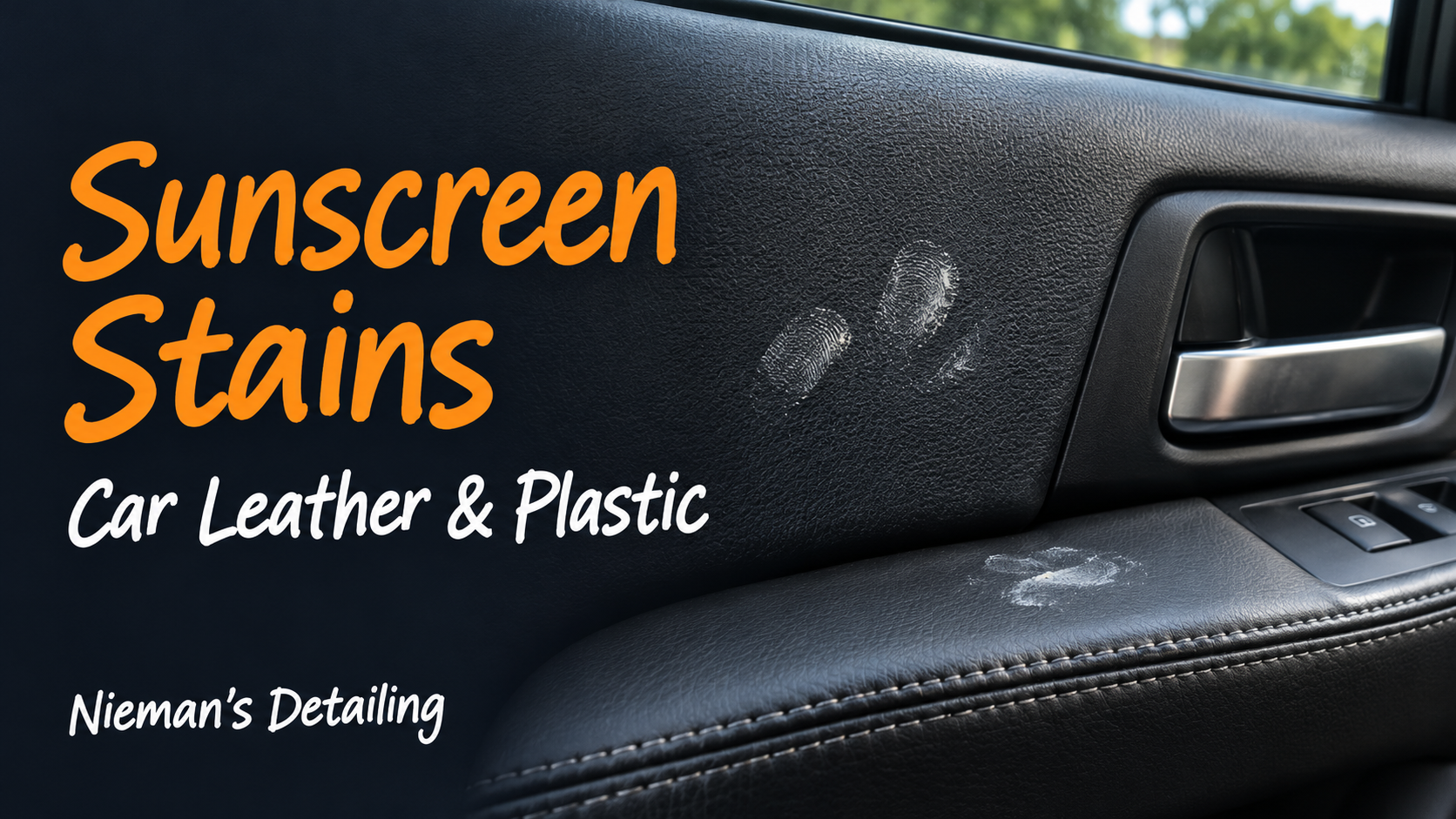
If you’ve ever gotten back in the car after a hike and found a white forearm print on the door, sunscreen may be the culprit. It rubs off skin onto leather seats, armrests, steering wheels, and plastic trim. Fresh residue is often removable. Leave it sitting, though, and some formulas can discolor or permanently damage certain finishes.
Why does zinc oxide sunscreen leave white marks?
Zinc oxide is a mineral ingredient that helps protect skin from UV light. Its particles can also scatter visible light, which is why some mineral sunscreens leave a white cast. When that sunscreen transfers to your car, the same pale residue stands out against black leather and charcoal plastic. It can settle into the grain of textured trim and around stitching. UCLA’s explanation of zinc oxide and white cast.
A chalky print can be a clue, but it doesn’t tell you whether the finish is damaged. The zinc oxide helps explain what you see; the whole sunscreen formula matters when it comes to how the surface reacts.
Can sunscreen permanently damage car leather or plastic?
Yes, on some surfaces. Kia’s interior care manual warns that sun cream can damage or discolor interior parts and advises removing contaminants from leather promptly. In a separate automotive materials study, researchers found that prolonged sunscreen exposure at elevated temperatures could cause fine cracks in a type of plastic used for parts like buttons.
There’s no universal cutoff for when a mark becomes permanent. The sunscreen formula, the material and its finish, and how long the product sits all matter. If the color, sheen, or texture still looks different after gentle cleaning and drying, stop before scrubbing harder. It may be stubborn residue, or the finish itself may have changed. Cleaning can lift residue; it can’t restore a coating that’s already damaged.
How to clean fresh sunscreen off a car interior
- Blot up the excess. Use a clean, soft microfiber cloth. Lift off what you can without rubbing it farther into the grain or seams.
- Check your owner’s manual. Use only the cleaning method it recommends for that surface. Leather, synthetic upholstery, and plastic can have different care instructions.
- Test in a hidden spot first. If the manual allows a cleaner, apply it to the cloth instead of spraying it directly onto the seat or trim. Wipe gently and let the area dry before judging the result.
- Stop if the mark won’t lift or the finish changes. Avoid abrasive sponges and strong household cleaners. An aggressive cleanup can take color or finish off the surface along with the sunscreen.
Keep the sunscreen. Catch the transfer early.
Apply sprays outside the car so the mist doesn’t land on trim, wipe excess lotion off your palms before grabbing the steering wheel, and check the door armrests and seat edges after a day out. Tesla’s owner’s manual also recommends cleaning sunscreen off the steering wheel promptly.
If sunscreen marks are still visible after a gentle clean, request an interior detailing quote from Nieman’s Detailing. Tell us which surfaces are affected and what you’ve already tried. We can help you figure out whether the mark needs more cleaning or closer inspection.